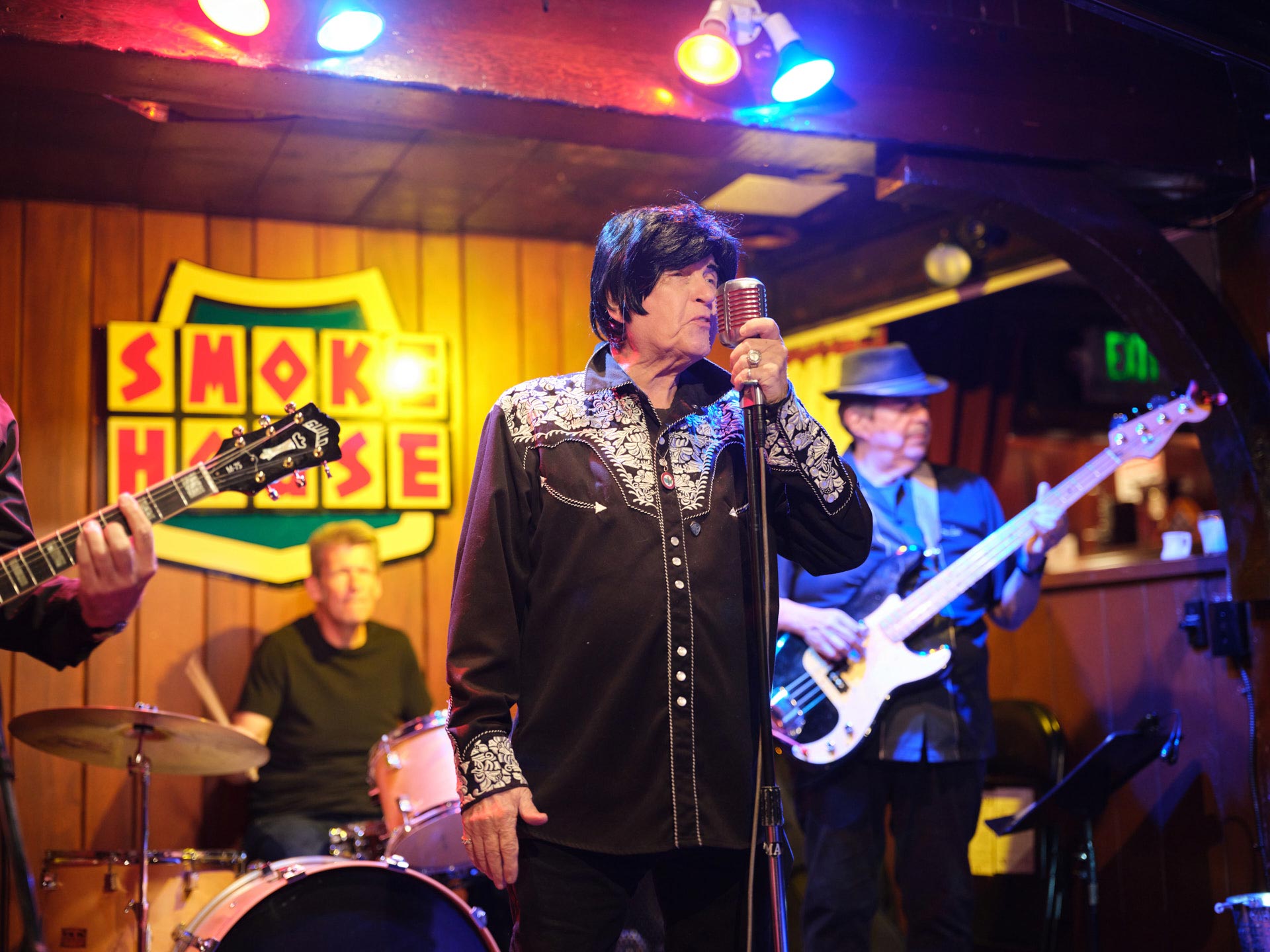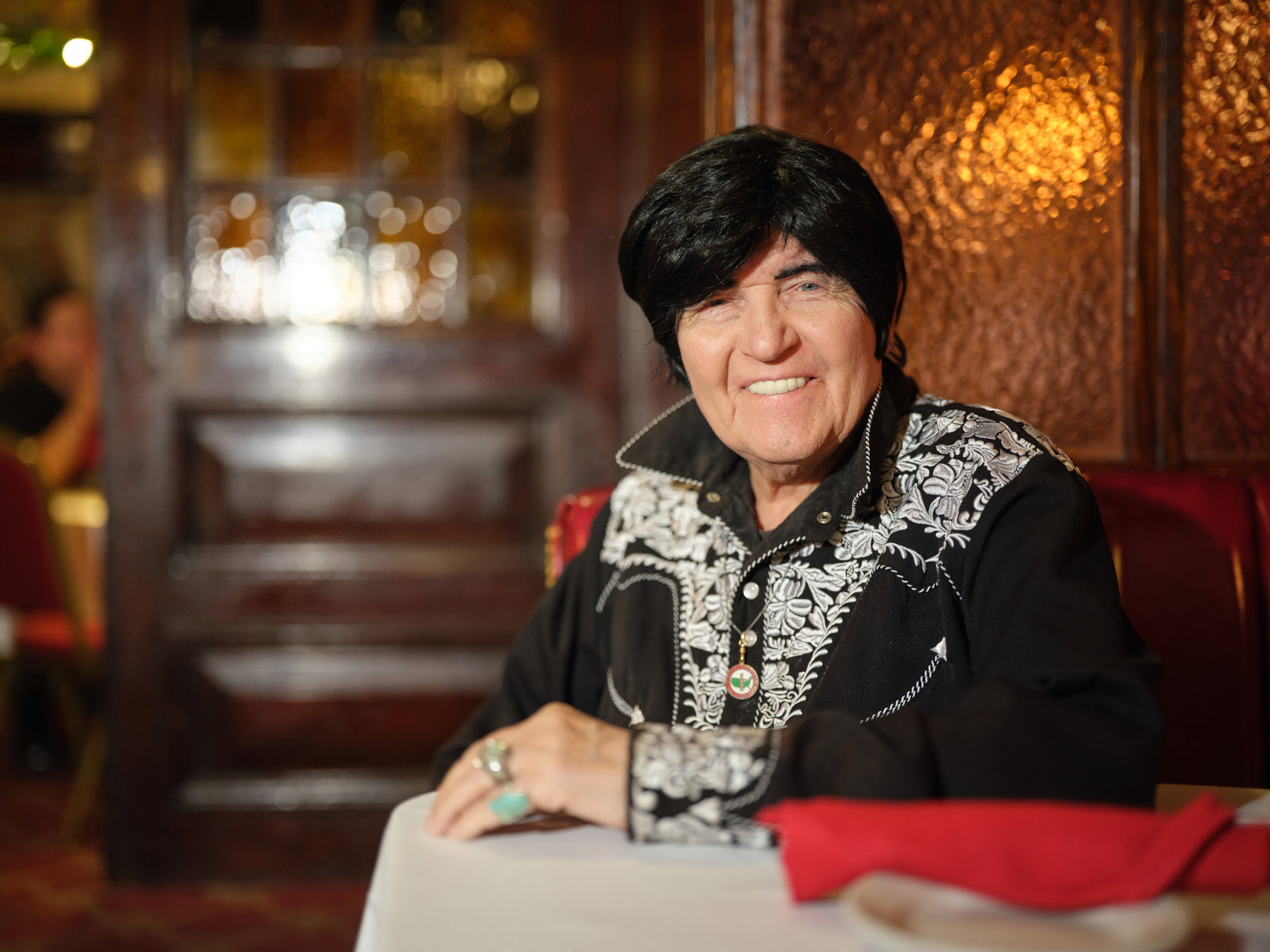

Veteran rocker Jimmy Angel is nothing short of phenomenal — an old-school big-beat shouter whose intimacy with Memphis soul, hardcore Tennessee country music and Category 5 rock ’n’ roll makes for a stunning presentation. Now almost 70 years into his career as an entertainer, Angel is still raising rafters and flipping wigs wherever he appears. For him, there’s just not another way to be: “I’m a ’50s bop cat,” Angel says. “It’s that simple.”
To say Angel’s life has been extraordinary would be a catastrophic understatement. Born to top-ranked Ziegfeld Follies Girl Ginger Tyler — a luminous beauty who was well connected to both high society and the underworld — Angel was a concerningly premature newborn, so tiny that he initially slept in a shoebox following his 1935 arrival.
Now age 90, the Riverside Rancho–based Angel consistently draws SRO crowds to his monthly Saturday residency at Burbank’s fabled Smoke House restaurant — an engagement that just entered its 15th year.
A still-vigorous showman with steely tenor pipes and wild stage moves inspired by the James Brown and Jackie Wilson school of shakin’ cool, Angel’s relentless drive is almost superhuman. The singer’s piercing blue eyes require no corrective lenses and his war cry pipes ring as authoritatively clear, true and powerful as they did when he began making records generations ago.
A prolific lyricist, he’s cut a slew of memorable material — 38 singles and multiple retrospective collections — over the decades, not the least of which is his current Love Fever album, featuring 14 classic Angel compositions with the propulsive accompaniment of his superlative backing band, the Jason Gutierrez Three.
In studios from Manhattan to Hollywood to Tokyo, Angel’s explored the full spectrum of American pop, including such penetrating sociopolitical statements as 1977’s wild “Wake Up, America,” inspired by Chicago Cubs outfielder Rick Monday’s intervention when protesters tore down and attempted to burn Old Glory at Dodger Stadium. UPI’s Ann Lo Lordo described the song “as a hit single that condemns high baseball salaries, dirty movies, [murderer] Gary Gilmore and applauds the Chicago Cubs, King Kong and Rick Monday.” Even more remarkable is Angel’s impassioned 2021 single “The Same Civil War,” a somber, soulful meditation decrying man’s inhumanity to man, rolling from Gettysburg to the Trail of Tears to MLK, Jerusalem and beyond.
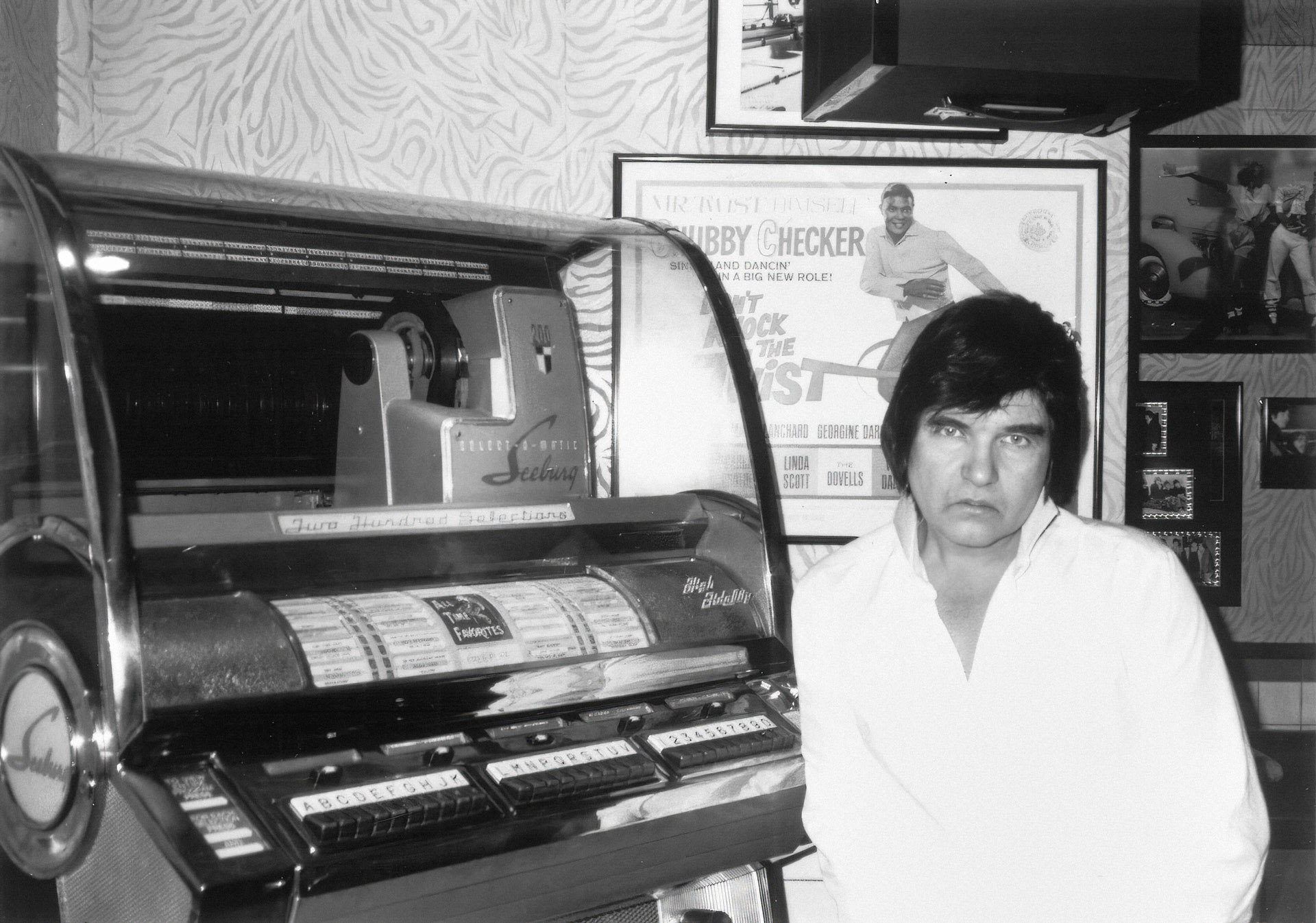
Additionally, Angel is contributing to Pat Boone’s forthcoming all-star Buddy Holly, Ritchie Valens and Big Bopper tribute set Three Stars, featuring newly recorded tracks from Boone, Chicano rock spearhead Chris Montez, the indefatigable charmer Frankie Avalon, modern pop icon Marshall Crenshaw, Sha Na Na and many others, again backed by the prodigious JG3.
Angel’s career path has been exceptionally offbeat: plucked from obscurity circa 1959 to become the teen idol protégé of infamous Mafia don Joe Colombo (who took control of the Profaci Family in 1963), Angel became a fixture at the Copacabana, Peppermint Lounge and a million other Manhattan joints. One of them, Fun City, was where he opened for Jimi Hendrix — on the very night Colombo rival Crazy Joey Gallo dispatched a couple of goons who opened fire on Angel from the dance floor. They missed, fatally wounded a Hendrix fan and managed to escape (this was confirmed to me personally by Fun City operator Howie Finkelstein).
Another attempt involved a Gallo hitman snarling, “Say hello to Joe for us, Jimmy,” going point blank with a sawed-off shotgun that jammed and failed to discharge. “You really must be an Angel,” the thug muttered as he withdrew.
While Angel’s involvement with Colombo was always either strictly on the bandstand and recording studio or on social terms, the pair formed an intensely close bond. Jimmy called him Pops, Joe Jr. was like a brother and the infamous hitman Philip “Fat Philly” Dioguardi was assigned as Angel’s minder.
The singer led the life of a prince. He had access to four swank townhouses, a lavish rock ’n’ roll wardrobe and the keys to a small fleet of luxury cars, but in 1971 when Colombo was gunned down in Columbus Circle on live television at one of his notorious Italian American Civil Rights League events — featuring Angel, Sammy Davis Jr. and Tom Jones — the singer faithfully paid his dues as caregiver for Pops, who lingered in a semiconscious state for the next several years.
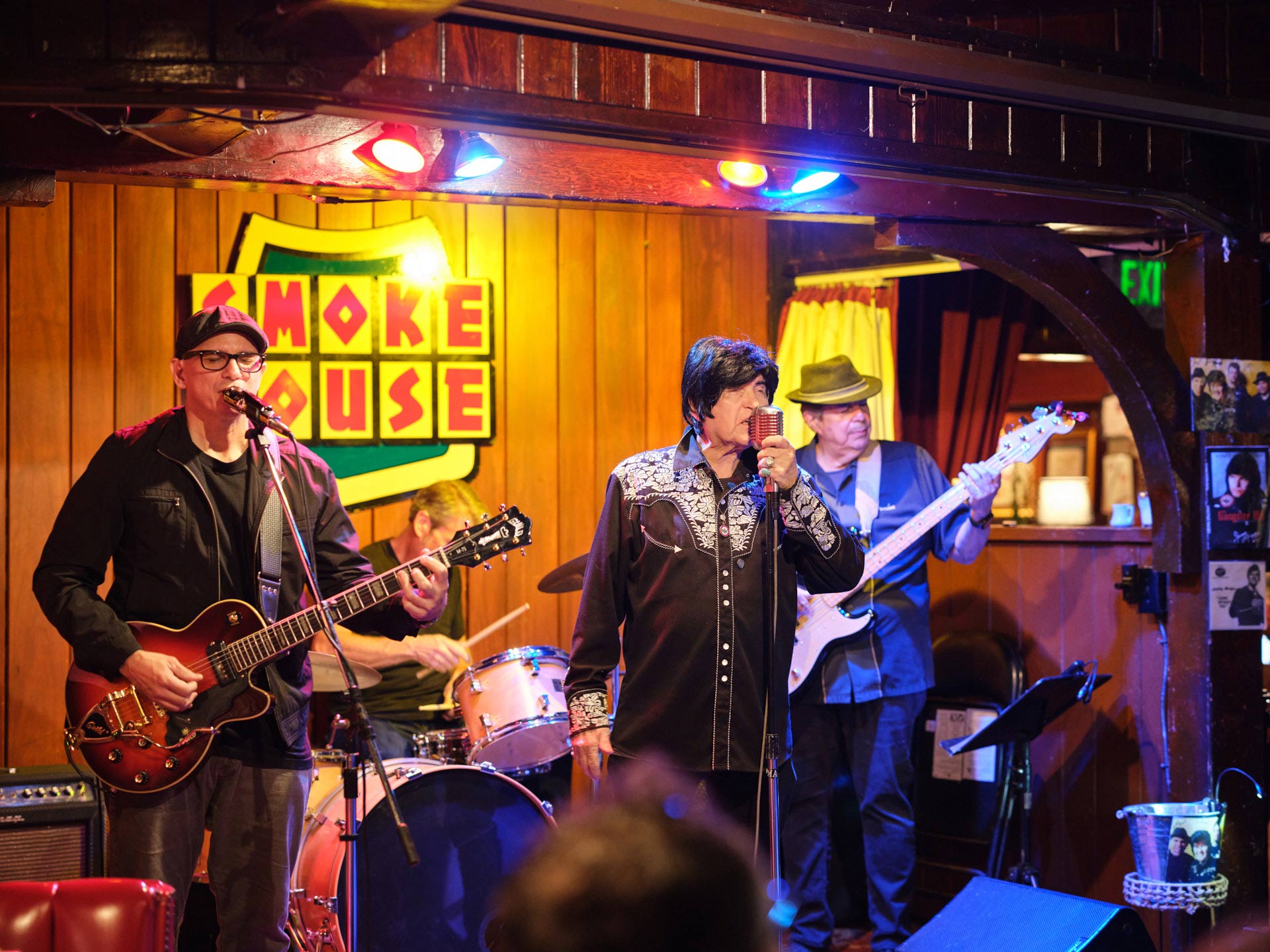
After returning all the house and car keys — and a suitcase full of cash — to Joe Jr., Angel was allowed to separate from the Family. He did time in Nashville and Hollywood and spent decades in Tokyo, where he worked at Yakuza after-hours clubs, did halftime shows at Tokyo Dome and sang ballads at Tokyo Disneyland while Mickey and Minnie skated together. Returning home after the Fukushima disaster, Angel never missed a beat, rocking all over Los Angeles and forming a critical alliance with acclaimed guitarist Jason Gutierrez.
The longstanding Angel agenda is as simple and direct as the man himself: “The ’50s were the best, cat,” he says. “Elvis, Marilyn, James Dean, Ricky Nelson, Eddie Cochran — that’s what I care about. I don’t need any Madonna or heavy metal. Anything past 1964, I don’t even think about…. My dream is to bring the ’50s back. That’s what Pops wanted too, but he got shot before we could do it.”
The bond is ever present: “I can never repay the Colombo family for what they did. Never. I would have been washing dishes somewhere. I could barely read or write — they saved me. And they made me a teen idol.”
His live shows remain chronically electrifying, and he effortlessly conjures the almost mystical drive his rock ’n’ roll heritage has long since instilled.
“The Smoke House is the closest thing to the Copa,” Angel says. “And the guys I have with me, the Jason Gutierrez Three, are fantastic. They sound just like Booker T. & the M.G.’s.”
“We broke the Captain & Tennille’s attendance record there,” he says. “When we play, it’s boob to boob and booty to booty by 8 p.m.; there’s no place to sit.
“I’m just trying to survive. I want to go out rockin’, not on my knees.”
Jimmy Angel typically performs monthly shows at the Smoke House. For information on upcoming performances, visit smokehouse1946.com/calendar.