
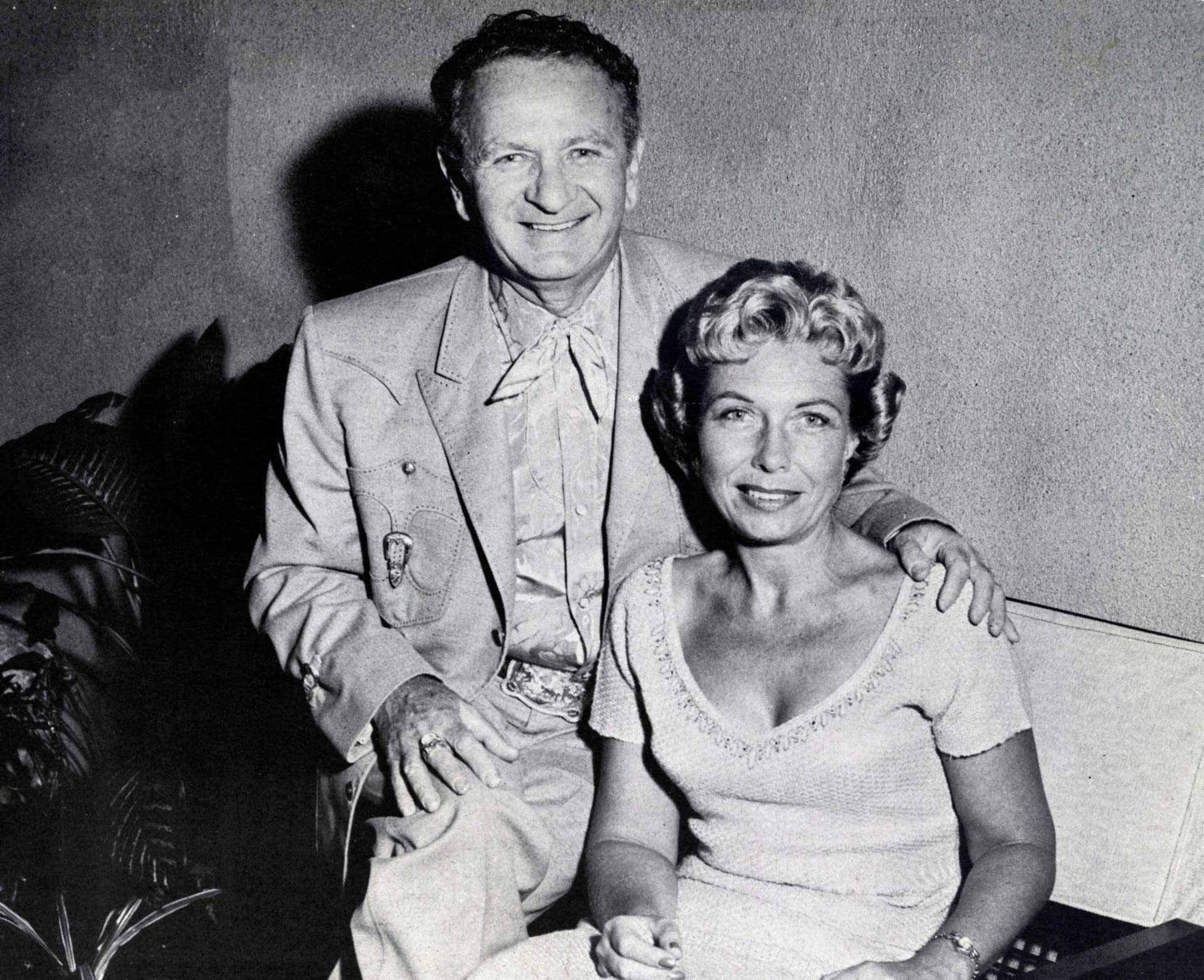
Ukrainian immigrant Nudie Cohn injected blazing Technicolor into what many considered the dull rural backwater of the San Fernando Valley in the late 1940s, weaving the richness of cultural diversity through his bespoke Western-wear designs. Rising in parallel with the singing cowboy movie genre and the success of North Hollywood’s Palomino Club, the iconoclastic Cohn served as the very first “rhinestone cowboy,” blending chutzpah and flamboyance in his fantastical creations to proclaim that anyone could be the star of their own show, unique in every way.
Cohn was born Nuta Kotlyarenko on December 15, 1902, in what is now Kiev, Ukraine, to a hardworking bootmaker and his wife. At a young age, he fell in love with fabric and creating colorful designs while serving as a tailor’s apprentice at a time when his family and other Jewish residents experienced the horror and tyranny of Russian antisemitism. Hoping to save their children, the Kotlyarenkos blessed their three oldest sons’ escape to freedom in the promised land of America. Arriving at Ellis Island, the boys found their names mangled. Nuta, now converted to the more easily pronounceable “Nudie Cohn,” began his hardscrabble climb to success.
Cohn crisscrossed the country over the next few decades, working a variety of hodgepodge jobs and often falling back on his tailoring skills for survival. While living in Mankato, Minnesota, in 1932, he fell in love at first sight with Helen Barbara Kruger, or “Bobbie,” his lifelong soulmate. Moving to New York City, they opened a clothing shop named “Nudie’s for the Ladies” near Times Square, customizing showgirl lingerie and fanciful stage outfits for burlesque queens and strippers with rhinestones and baubles.
Looking for greater adventures after returning to Minnesota, the couple moved to sunny Southern California in the early 1940s, living at 6830 Sunset Blvd. and operating a clothes-cleaning and tailoring business. Eager to expand, Cohn turned to manufacturing two-toned men’s jackets and accessories out of a Hollywood warehouse, and later out of his San Fernando Valley home garage, slowly building a clientele.
Financially stretched, Cohn earned his first major break with Western swing performer Tex Williams after he departed Spade Cooley’s band to form his own group. Both short of cash, the two struck a deal to auction Williams’ horse and use the proceeds to purchase a $140 sewing machine so Cohn could create a custom outfit for Williams. Williams’ subsequent nightclub sellout set them both on the road to success.
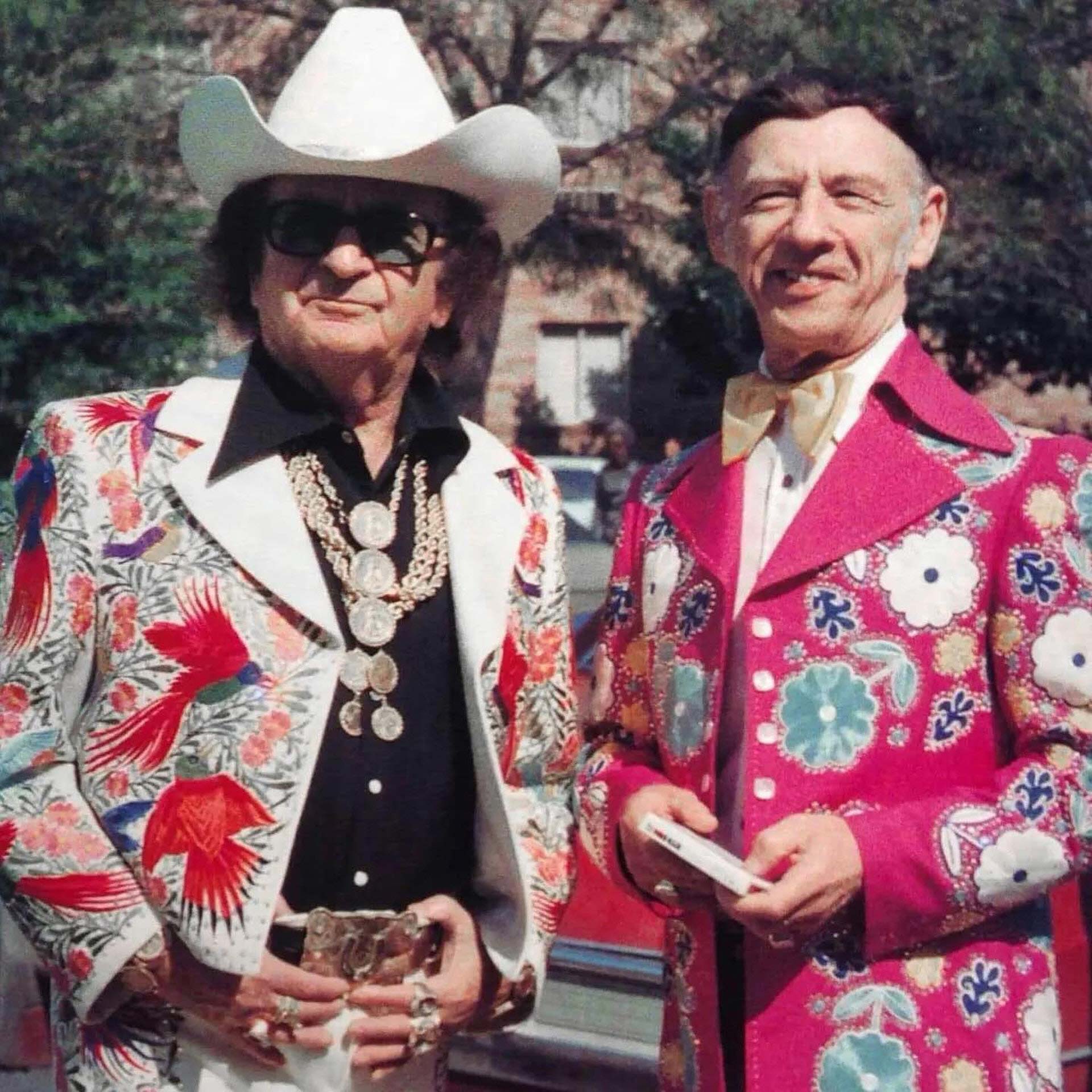
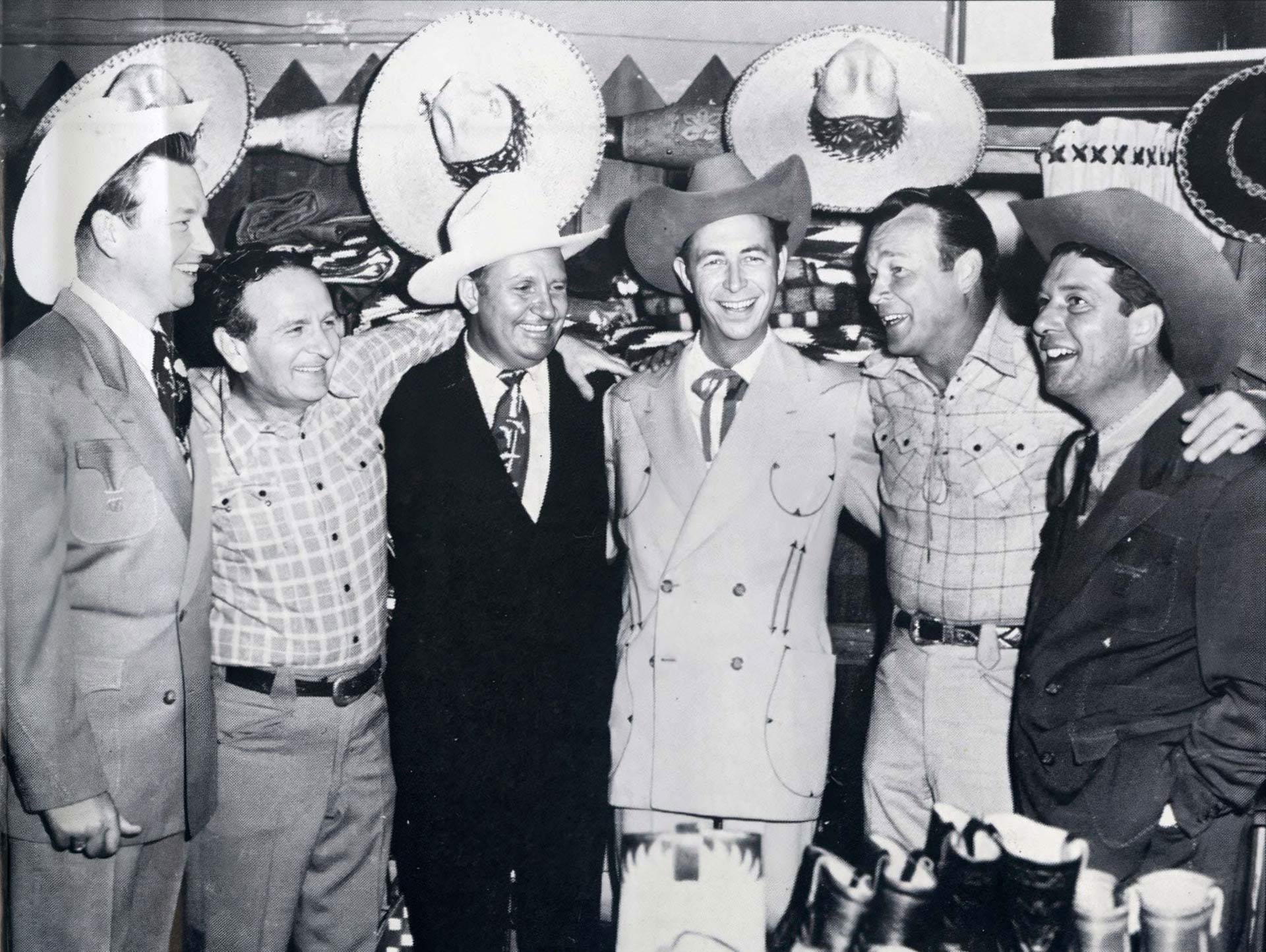
Rodeo performers and Western swing bands recognized the power of Cohn’s attention-grabbing designs to differentiate themselves from the pack, employing their bedecked wardrobes to spruce up their professional appearances and make them look and feel like stars. Needing to expand, he moved to a fancier showroom and facility at Victory Boulevard and Vineland Avenue, later relocating to 5015 Lankershim Blvd. He operated under the name “Nudie’s Rodeo Tailors” as the perfect designer for the “sharp dressed man.”
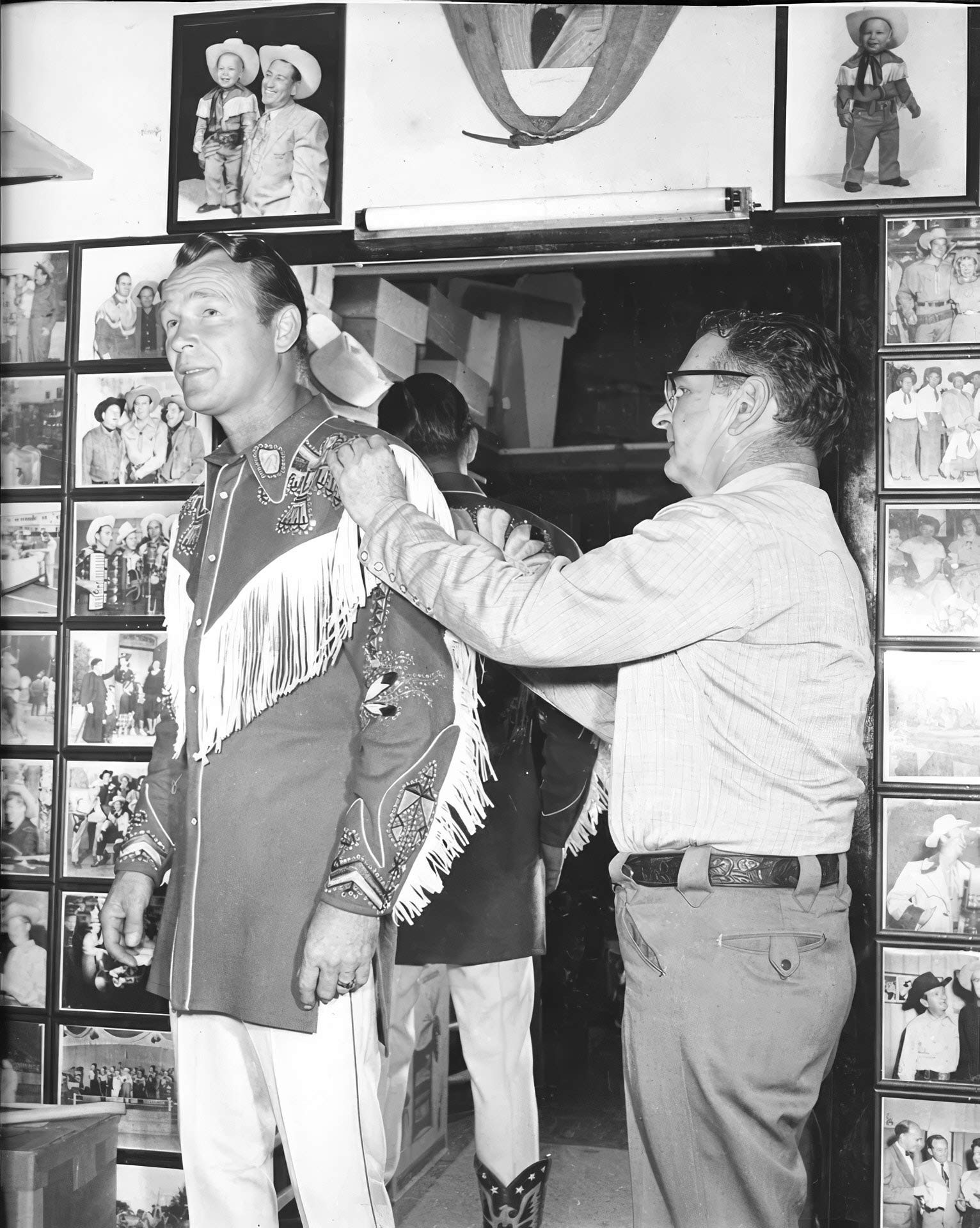
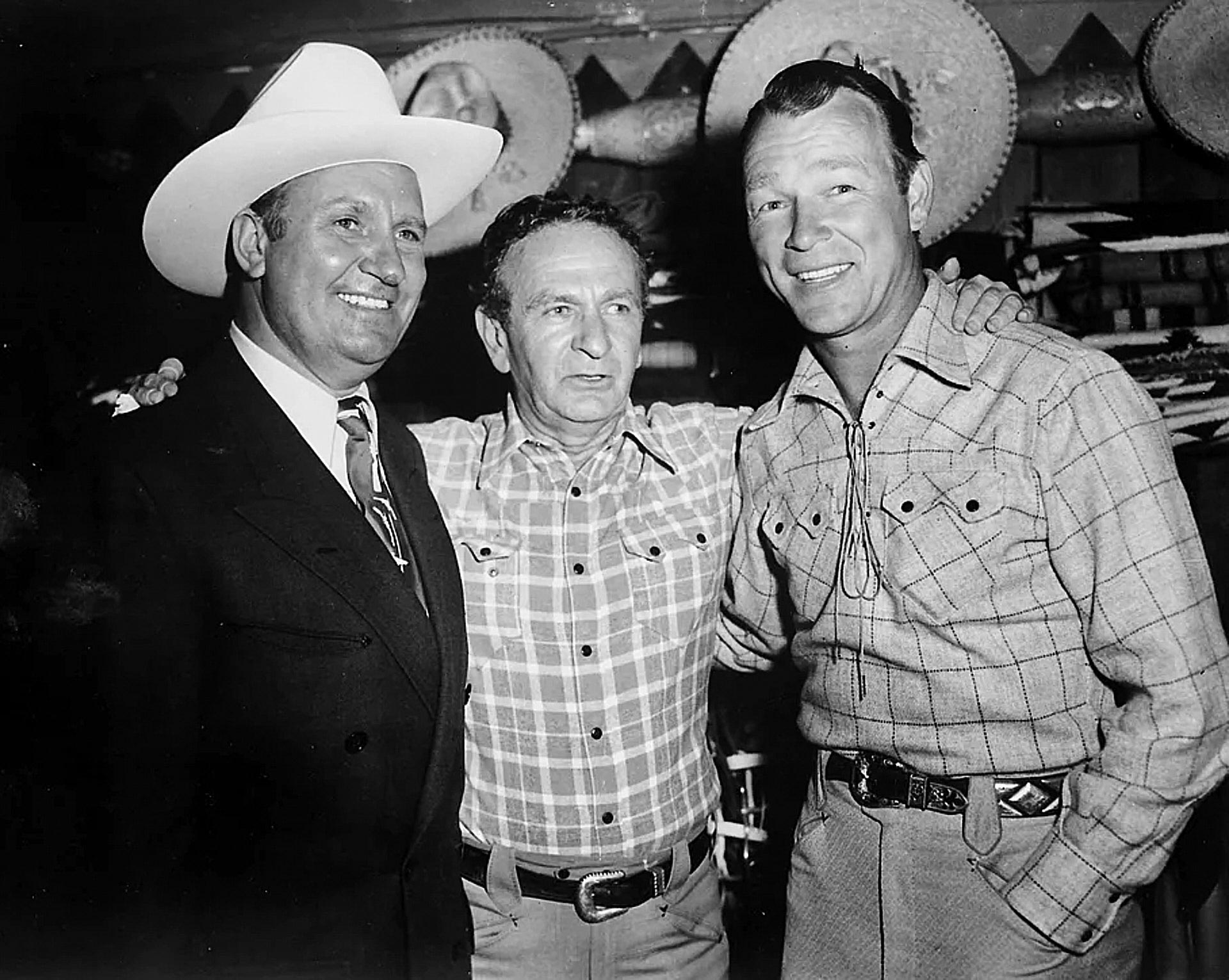
After Cohn began designing flashy outfits for Republic Pictures’ singing cowboys like Gene Autry and Roy Rogers, some journalists nicknamed him “Adrian of the sagebrush” for his dazzling costumes (after famed film costume designer Adrian Greenburg — a Toluca Lake resident in the 1930s and ’40s). Each featured their own unique design, from Autry’s more conservative look to Rogers’ fringe and rhinestones to Rex Allen’s metallic lamé. Even cowgirls got in on the act, with form-fitting pin-up outfits showcasing singers and bombshells alike.
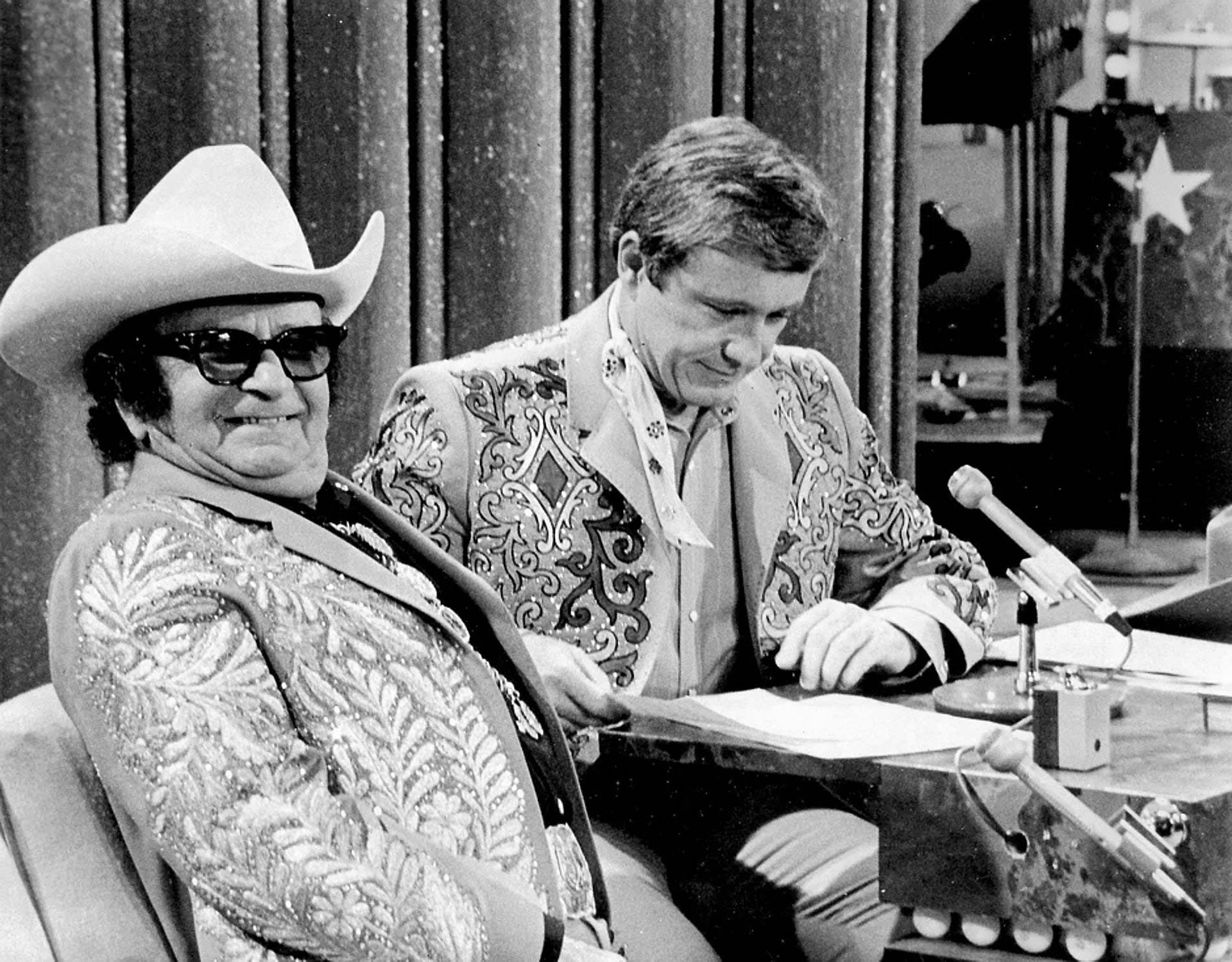
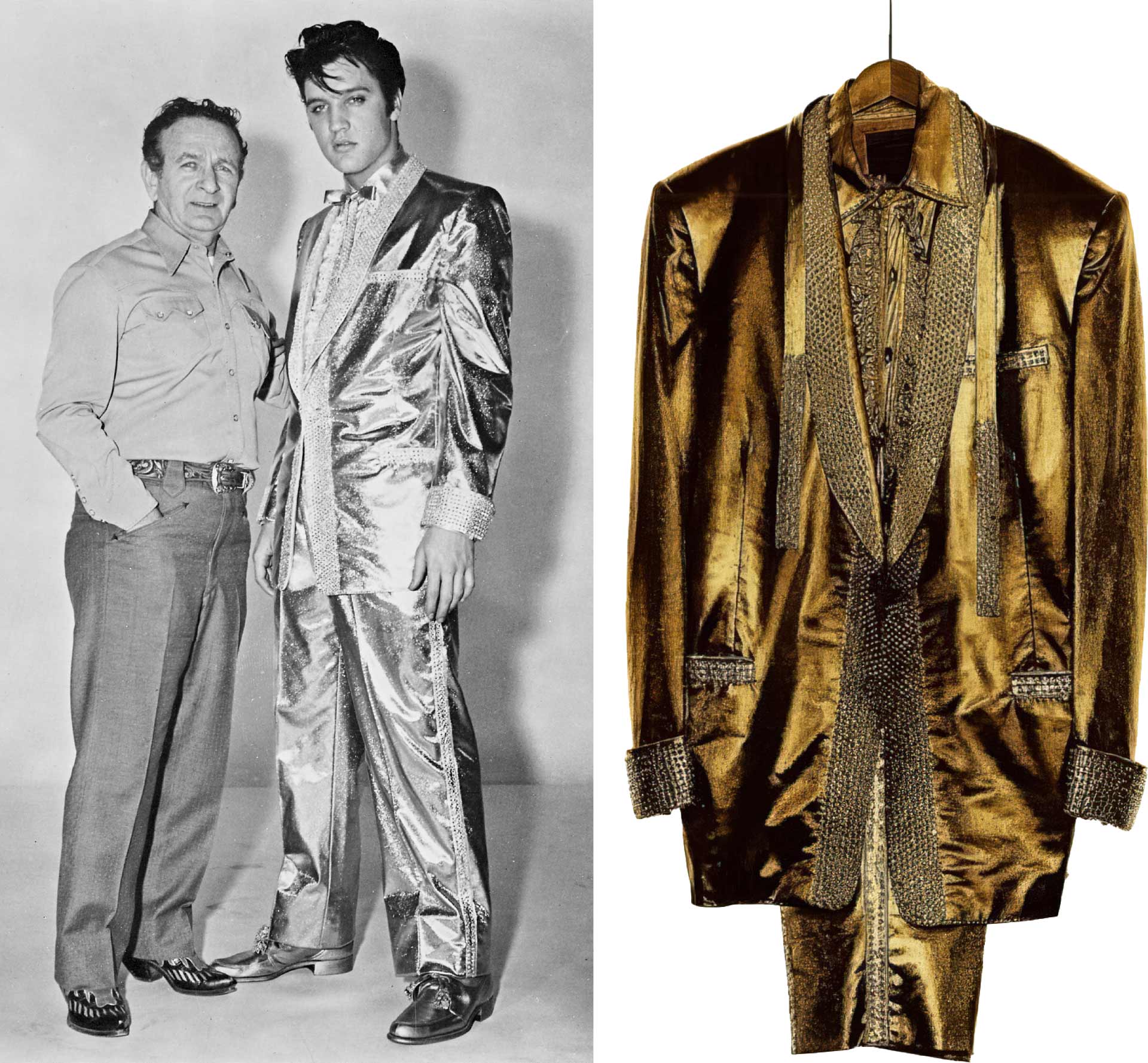
Cohn’s special outfits for three unique performers exploded his popularity and trendsetting designs. Roy Rogers’ comment that “he wanted to be seen by the last kid in the nosebleed section when he galloped Trigger into Madison Square Garden” led Cohn to employ a heavy mix of rhinestones for the first time. As he later informed the press, “The biggest thing that helped me was rhinestones. They went over like a house afire.” Elvis Presley and Colonel Tom Parker commissioned Cohn to design a supposedly $10,000 gold lamé suit for the film Loving You, and later featured it on an album cover — brilliant free promotion for the designer. Porter Wagoner found his trademark after Cohn donated a spangly, rhinestone-bejeweled, peach-colored suit with wagon wheels and cacti before a major concert in 1962. The attention-grabbing suit slayed audiences, becoming Wagoner’s legendary look in a rainbow of colors.
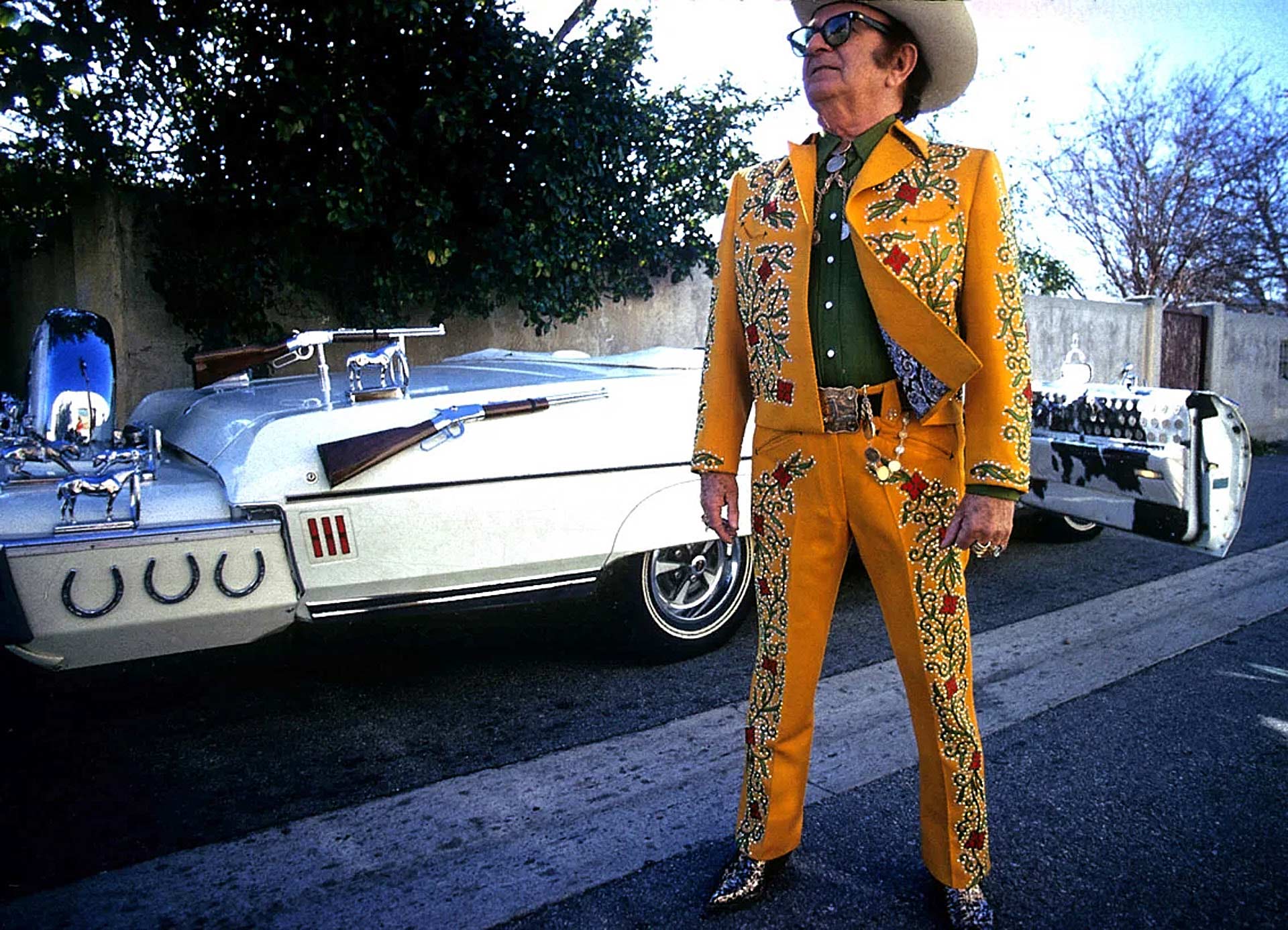
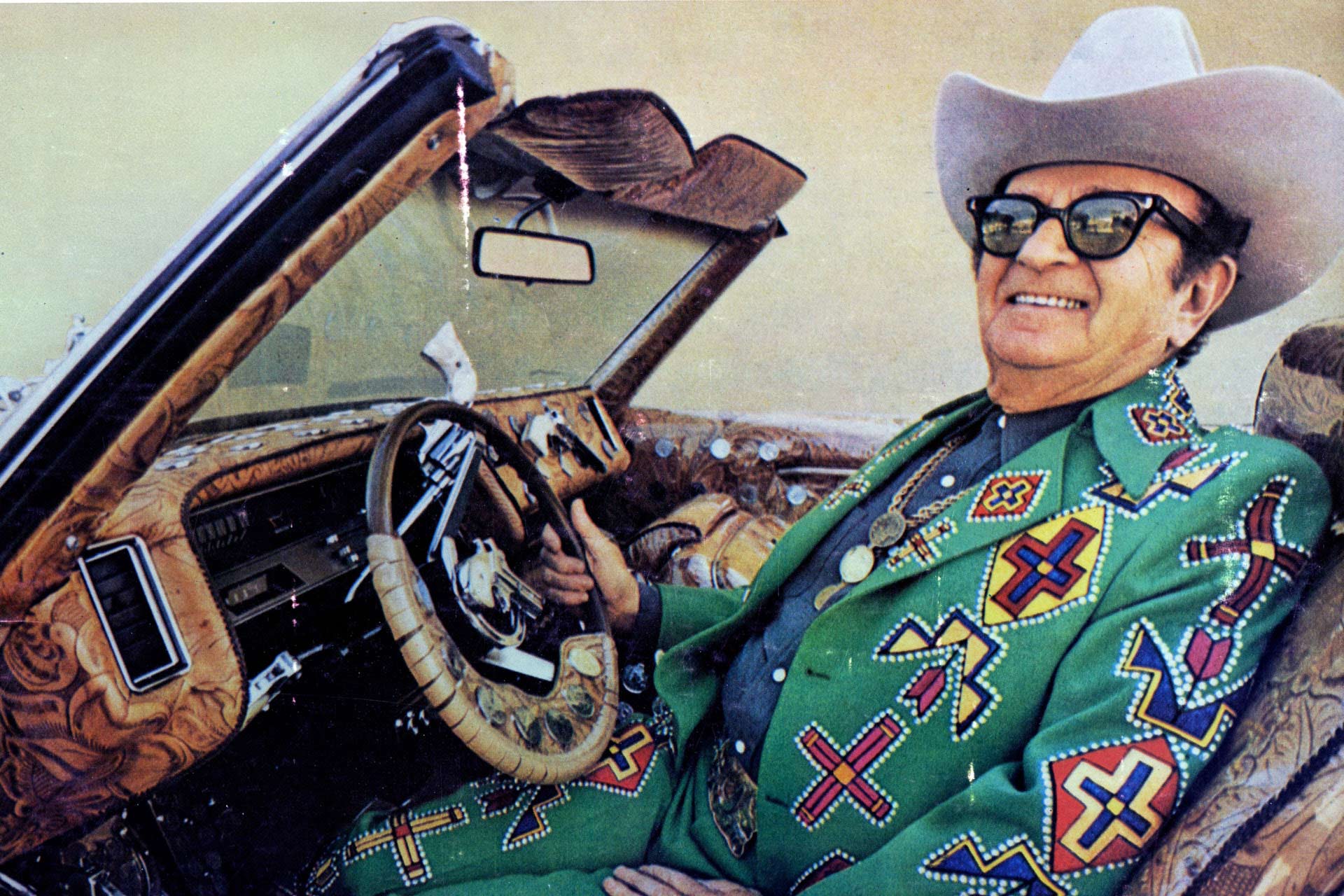
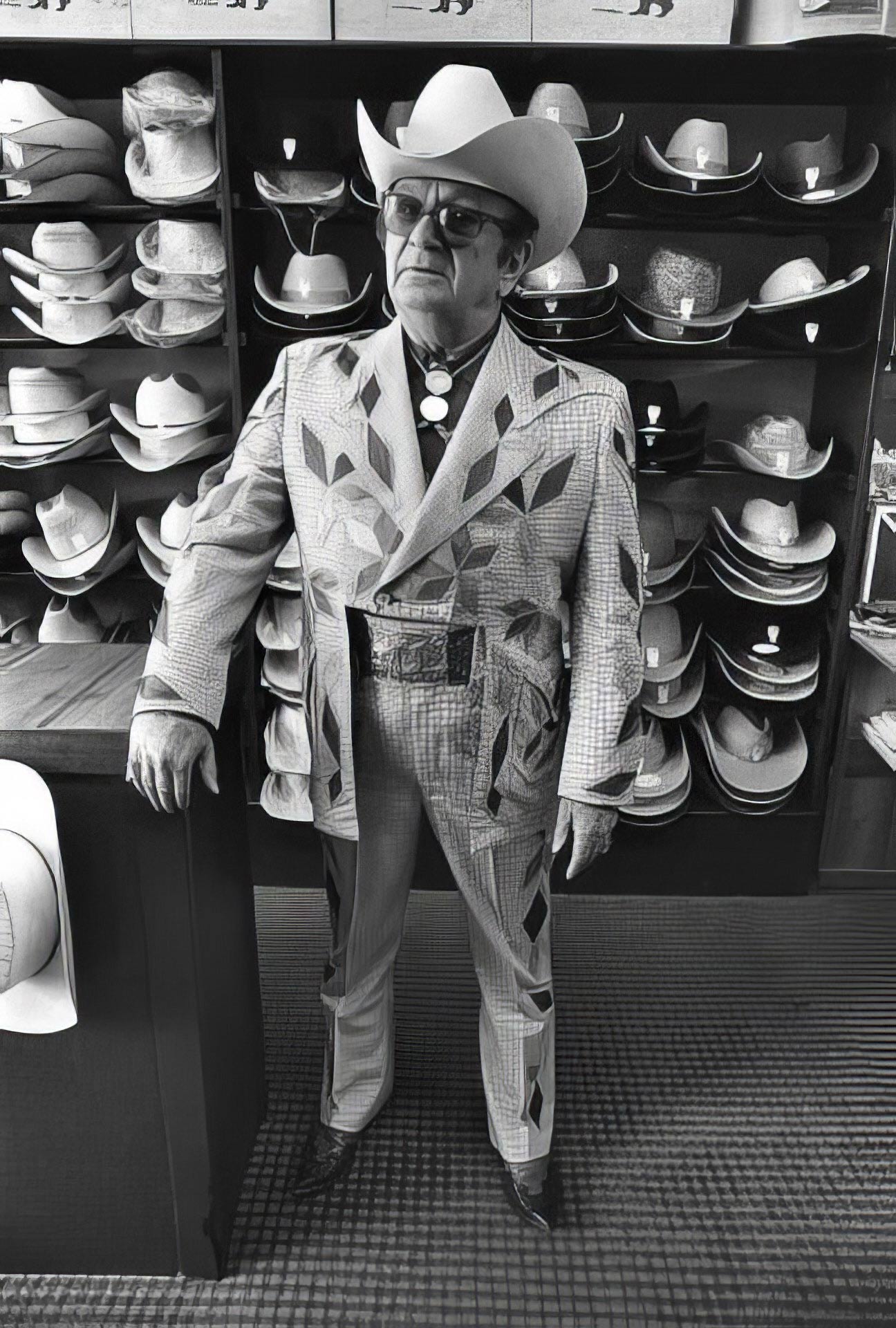
As his fame and fortune grew, so did Cohn’s own flashy wardrobe. Elaborate Stetsons, bold mismatched boots and his eye-popping suits served as the perfect calling card for his ostentatious designs. In later interviews, Cohn confided, “Once I was as poor as a church mouse and I had nothing to wear, and I said someday I’m going to have all these things.” Once a lowly immigrant fighting for success, he soon found himself called the “hillbilly Picasso” by the likes of recording star Marty Stuart, impressed by his gorgeous suits for such performers as Lefty Frizzell, Hank Snow and George Jones.
Cohn’s more conservative Western wear and rainbow-colored suits even graced movie and TV screens over the decades, adding extra panache. TV shows such as The Lone Ranger, Bonanza and Hee Haw featured his fancy designs, as well as such movies as Loving You and Clambake with Elvis Presley, Bye Bye Birdie, The Electric Horseman, Smokey and the Bandit and Twins. Cohn’s rhinestone-bedecked outfits even influenced Glen Campbell to write the song “Rhinestone Cowboy.”
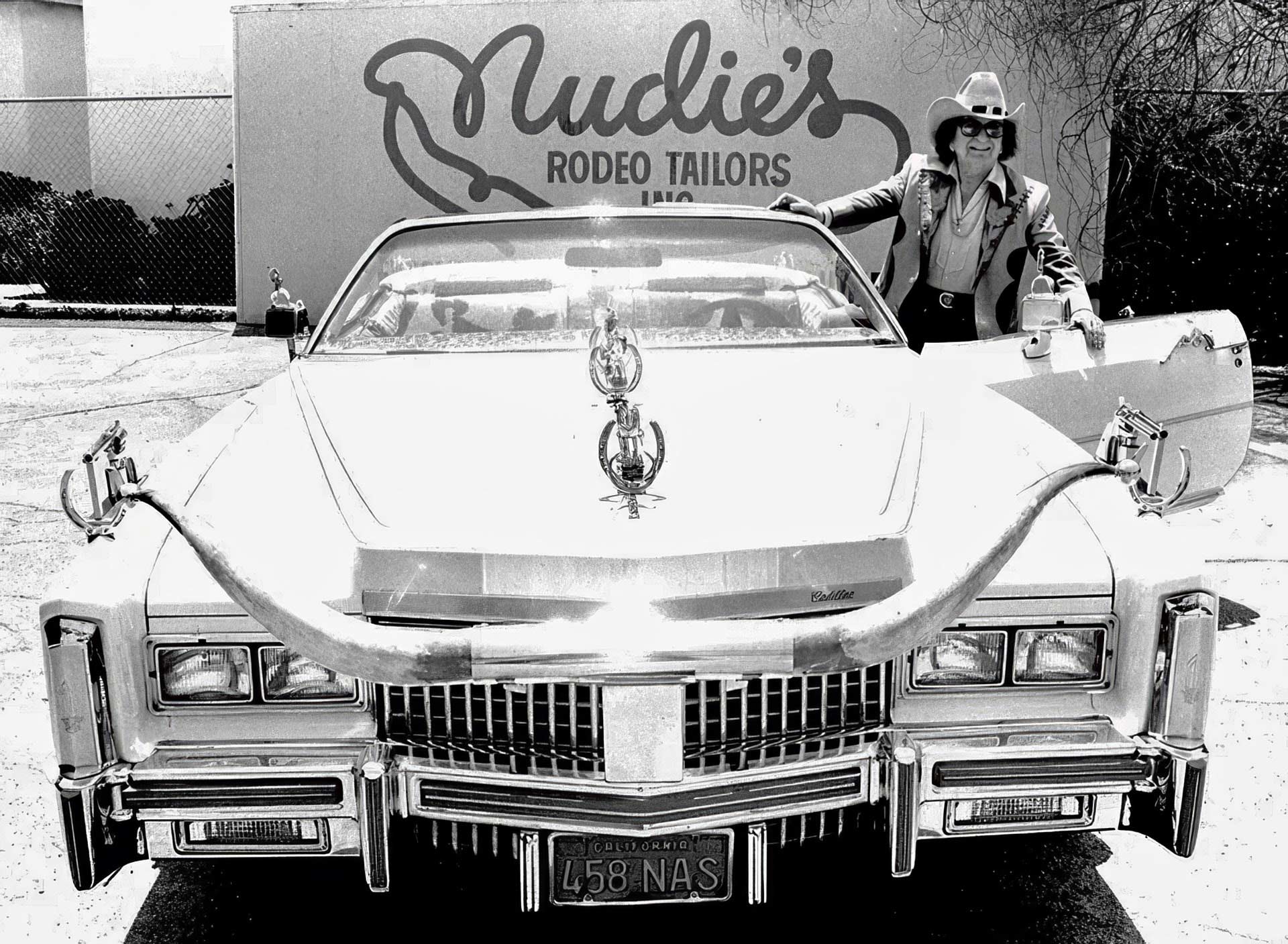
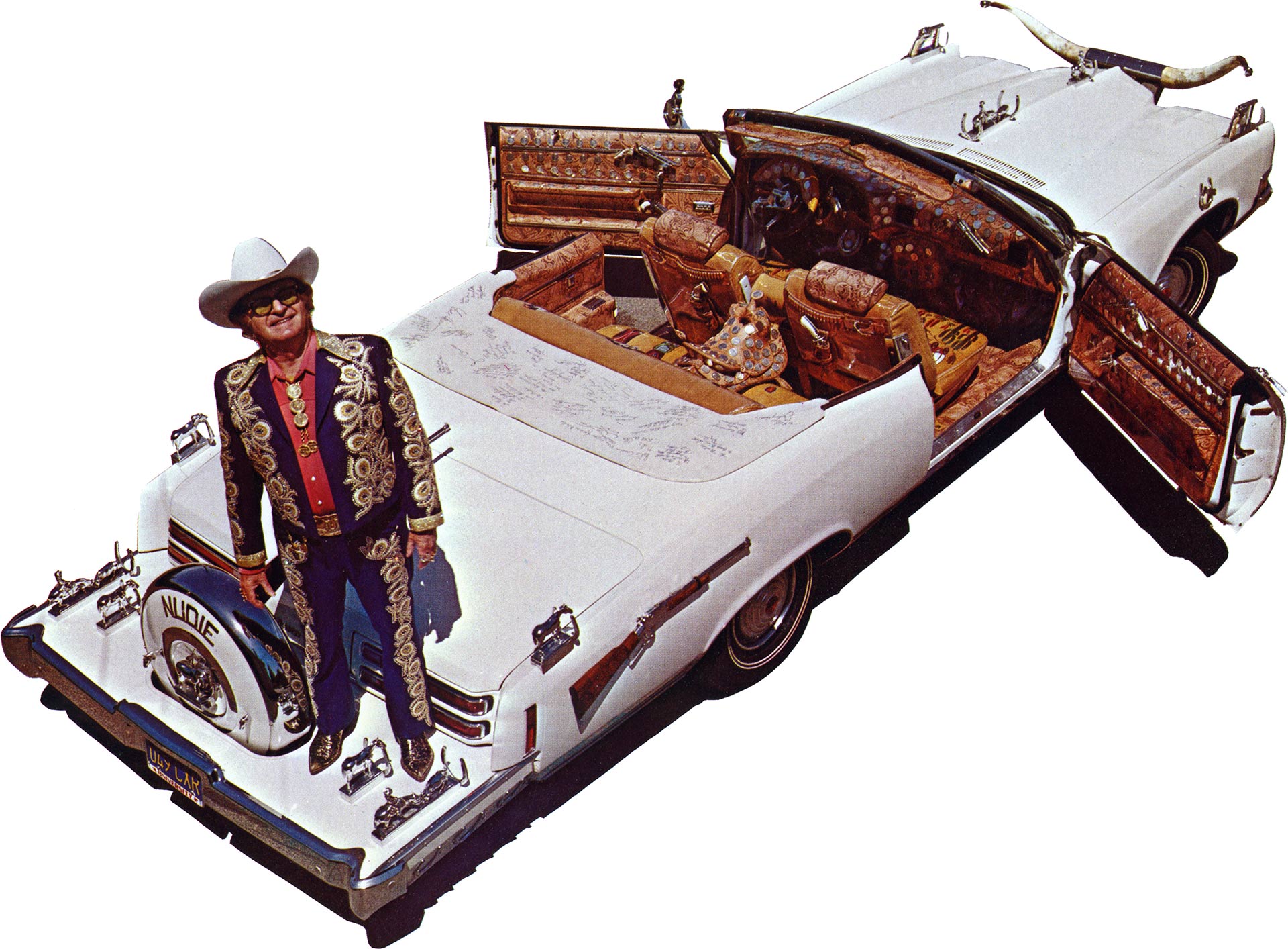
Taking it one step further, Cohn turned his design skills to cars. He began by tricking out his own 1950 Hudson with longhorns as a hood ornament, silver dollars adorning the walls, and sterling silver revolvers and pistols as stunning decoration, turning the vehicle into a one-of-a-kind mobile display advertising his showmanship. This Western-inspired fantasy, a “Nudie Mobile,” eventually led a local flamboyant car dealer to sign him to design flashy pimped-out convertibles as his own promotion, earning Cohn legions of new fans.
Over time, each customized convertible grew more gaudy and fantastically over-the-top. Stars like Roy Rogers and Webb Pierce received gifted Nudie Mobiles, and movies and TV shows such as The Jimmy Dean Show, To Tell the Truth and the Monkees’ film Head booked them for unique personal appearances, as did latter-day music videos.
Though music and entertainment tastes evolved, performers still hankered for some of Cohn’s electric duds, a sign of his iconic status. Western stars such as John Wayne and Audie Murphy and singers as diverse as Lou Rawls, Johnny Cash, Dolly Parton, the Rolling Stones, John Lennon, Gram Parsons, Elton John and Beck commissioned outrageous, personalized costumes, each telling their own unique story.
As the king of bling, Cohn achieved success beyond his wildest dreams, bringing worldwide recognition both to himself and to North Hollywood through his larger-than-life designs. Stars paid him homage by making pilgrimages to the store, seeking out his advice and inimitable costumes. After his death in 1984, Nudie’s Rodeo Tailors remained open for another decade under the ownership of Bobbie and their granddaughter Jamie, finally closing in 1994. Its influence lives on, however, in a new generation of designers whose homages to the original “Nudie Suits” are popular with performers like Jenny Lewis, Post Malone and Lil Nas X. Small in size but larger than life in talent and legend, Cohn brought sparkle, glamour and renown to the once staid San Fernando Valley.